Process plant operations (Production technician)
Course overview
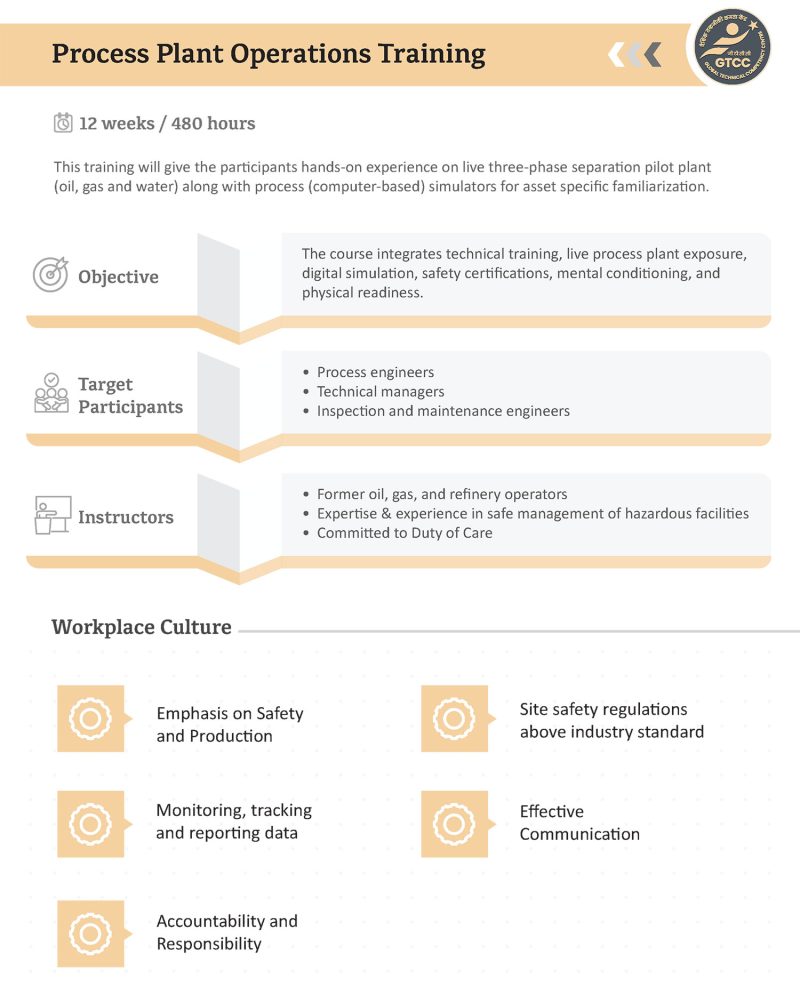
This course delivers hands-on capability development through a live three-phase separation pilot plant (oil, gas, and water), supported by computer-based process simulators for asset-specific familiarisation. The programme integrates technical training, live plant exposure, digital simulation, safety certification, mental conditioning, and physical readiness as a single readiness pathway.
Duration and format
12 weeks / 480 hours, delivered as a structured, full-time programme combining classroom learning, workshops, live plant operations, simulation, and assessment.
Target participants
Designed for personnel preparing for deployment in safety-critical process environments, including:
• Production and process technicians
• Operations personnel transitioning into plant roles
• Technical staff requiring validated readiness prior to mobilisation
(Role-specific entry criteria are defined on individual course pages.)
Instructors
Delivered by former oil, gas, and refinery operators with experience managing hazardous facilities and a strong duty-of-care orientation.
Instruction is grounded in real operating experience rather than academic abstraction.
Workplace culture and operating discipline
Courses reinforce operating behaviours expected on live assets, including:
• Emphasis on safety and production discipline
• Monitoring, tracking, and reporting operational data
• Accountability for task execution and handovers
• Site safety standards exceeding minimum compliance
• Clear, structured communication across teams
Course progression and structure
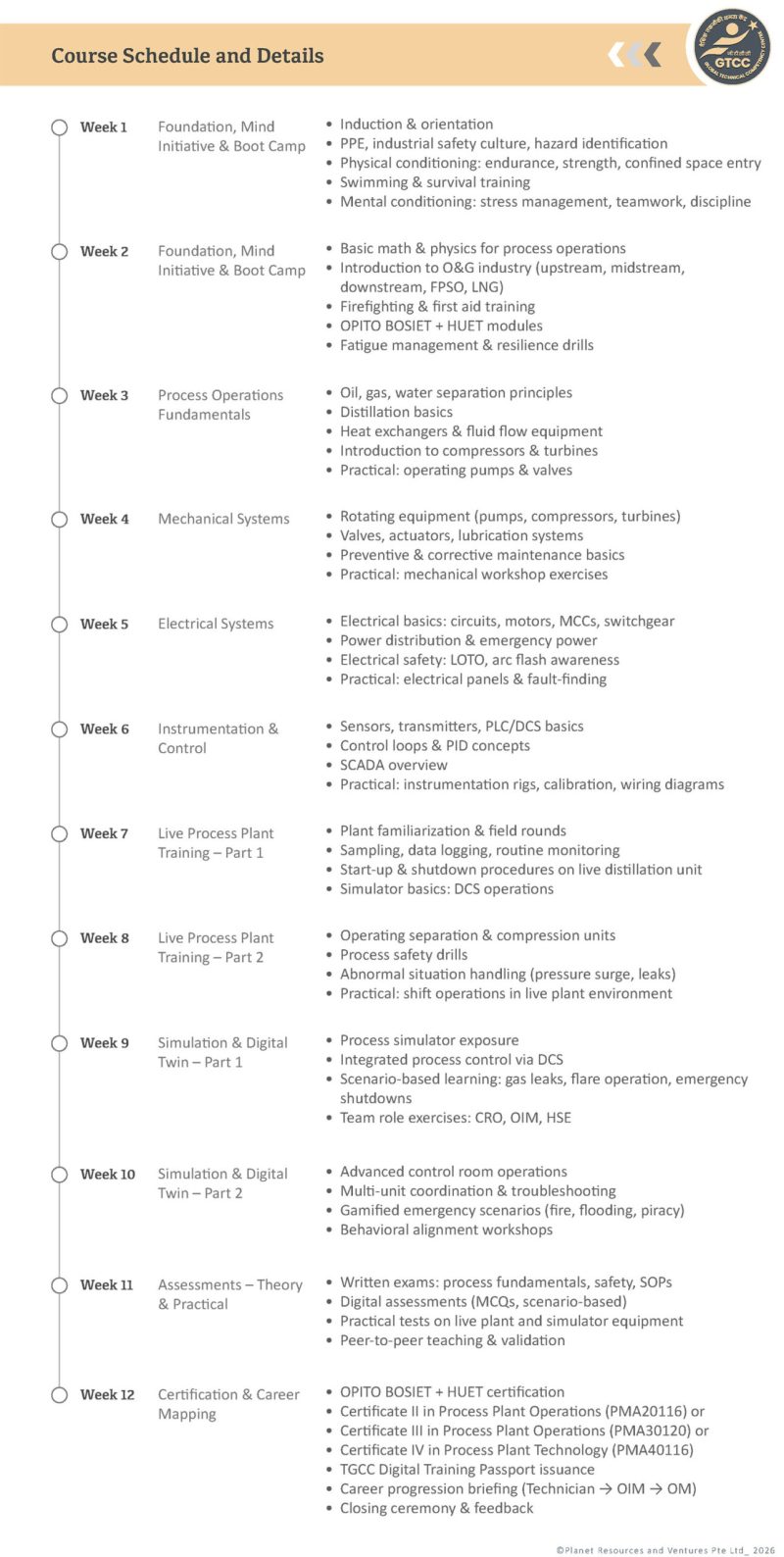
Foundation and readiness (Weeks 1–2)
Induction, PPE, industrial safety culture, hazard identification, physical conditioning, swimming and survival training, mental conditioning, fatigue management, and OPITO BOSIET + HUET modules.
Process and systems fundamentals (Weeks 3–6)
Process operations fundamentals, mechanical systems, electrical systems, and instrumentation and control, supported by practical workshops and rig-based exercises.
Live process plant operations (Weeks 7–8)
Plant familiarisation, field rounds, sampling, monitoring, start-up and shutdown procedures, abnormal situation handling, and shift-based operations in a live plant environment.
Simulation and digital twin (Weeks 9–10)
Process simulator exposure, integrated DCS operations, emergency and abnormal scenario handling, advanced control room operations, and team-based role exercises.
Assessment and validation (Week 11)
Written, digital, and practical assessments conducted on live plant and simulator equipment, including scenario-based evaluation and peer validation.
Certification and career mapping (Week 12)
OPITO BOSIET + HUET certification, nationally recognised process plant qualifications (Certificate II / III / IV), issuance of the GTCC digital competency passport, and career progression briefing.
Digital credentialing
All outcomes are recorded through GTCC’s digital systems, providing traceable training records, role-linked readiness status, and documentation suitable for audit, workforce planning, and deployment decisions.